Traditional Chinese Massage Techniques: Complete Guide to Tui Na, Acupressure & Meridian Therapy
- Tui Na (推拿): Deep tissue manipulation following meridian lines; best for chronic pain
- Acupressure (点穴): Finger pressure on specific acupoints; targets energy flow
- Gua Sha (刮痧): Scraping technique for circulation; reduces inflammation
- Cupping (拔罐): Suction therapy for muscle tension and detox
- Book with Linda Massage Shanghai: WhatsApp for authentic TCM-trained therapists
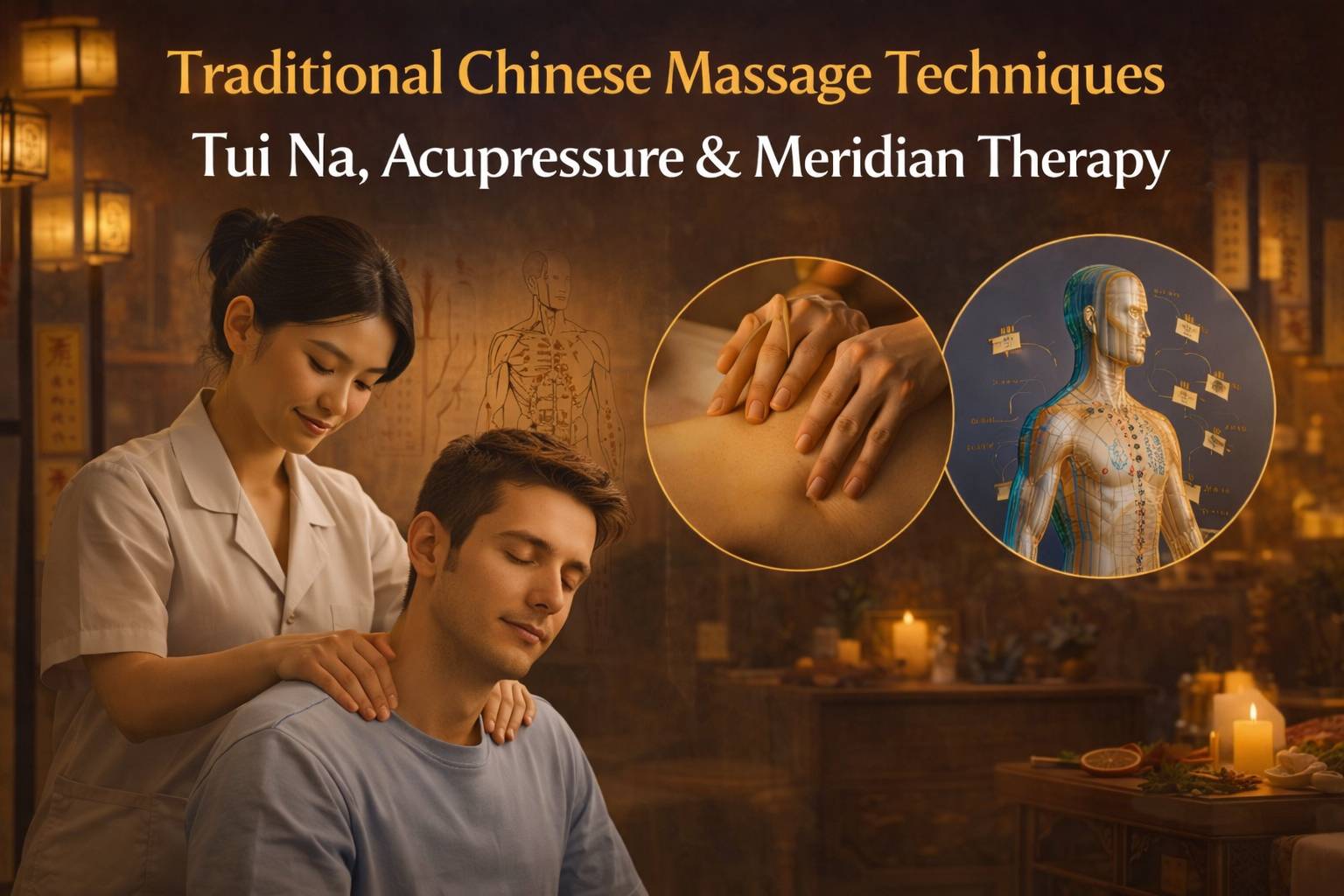
If you're searching for information about traditional Chinese massage techniques, you've likely encountered terms like Tui Na, acupressure, and meridian therapy. Unlike Western massage that focuses primarily on muscle relaxation, Chinese massage techniques are rooted in Traditional Chinese Medicine (TCM) theory, aiming to balance the body's vital energy (Qi) and restore health holistically.
At Linda Massage Shanghai, our therapists are trained in authentic TCM methods passed down through generations. This guide explains the major types of Chinese massage, their therapeutic benefits, and how to choose the right technique for your needs.
Understanding TCM Theory Behind Chinese Massage
Traditional Chinese Medicine views the body as an interconnected system where Qi (vital energy) flows through specific pathways called meridians (经络). When Qi flows freely, the body remains healthy. When it becomes blocked or imbalanced, pain and illness result.
Chinese massage techniques work by:
- Unblocking meridians: Removing stagnation to restore energy flow
- Balancing Yin and Yang: Harmonizing opposing forces in the body
- Stimulating acupoints: Activating specific points that influence organ systems
- Promoting blood circulation: Enhancing nutrient delivery and waste removal
The 12 Primary Meridians
TCM identifies 12 major meridians, each connected to an organ system:
| Meridian | Associated Organ | Common Issues Addressed |
|---|---|---|
| Lung (肺经) | Lungs, skin | Respiratory issues, skin conditions |
| Large Intestine (大肠经) | Colon | Digestive issues, shoulder pain |
| Stomach (胃经) | Stomach, digestive system | Appetite, leg pain |
| Spleen (脾经) | Spleen, muscles | Fatigue, bloating |
| Heart (心经) | Heart, mind | Anxiety, insomnia |
| Bladder (膀胱经) | Bladder, spine | Back pain, headaches |
| Kidney (肾经) | Kidneys, bones | Lower back pain, fatigue |
| Gallbladder (胆经) | Gallbladder, tendons | Migraines, hip pain |
Tui Na: The Foundation of Chinese Massage
Tui Na (推拿), literally meaning "push and grasp," is the primary form of traditional Chinese massage. Dating back over 2,000 years, it's one of the four main branches of TCM alongside acupuncture, herbal medicine, and Qigong.
Core Tui Na Techniques
- Tui (推) - Pushing: Gliding pressure along meridian lines
- Na (拿) - Grasping: Lifting and squeezing muscle groups
- An (按) - Pressing: Sustained pressure on acupoints
- Mo (摩) - Rubbing: Circular friction movements
- Pai (拍) - Patting: Rhythmic tapping to stimulate circulation
- Gun (滚) - Rolling: Back-of-hand rolling technique
- Dian (点) - Pointing: Precise finger pressure on specific points
- Yao (摇) - Shaking: Joint mobilization and rotation
What to Expect During a Tui Na Session
Unlike Swedish massage, Tui Na is typically performed through clothing or with minimal oil. A session at Linda Massage Shanghai follows this structure:
- Assessment (5-10 min): Therapist evaluates your condition through pulse reading and questioning
- Warming (10 min): Gentle techniques to prepare tissues and open meridians
- Main treatment (30-50 min): Targeted work on problem areas using appropriate techniques
- Closing (5-10 min): Gentle strokes to integrate the session and balance energy
Acupressure & Acupoint Therapy
Acupressure (点穴疗法) applies finger pressure to the same points used in acupuncture, but without needles. It's ideal for those who want the benefits of point therapy without invasive treatment.
Key Acupoints for Common Conditions
| Acupoint | Location | Benefits |
|---|---|---|
| He Gu (合谷) LI4 | Between thumb and index finger | Headaches, stress, immunity |
| Zu San Li (足三里) ST36 | Below knee, outer leg | Digestion, energy, longevity |
| Tai Chong (太冲) LV3 | Top of foot, between toes | Stress, anger, eye problems |
| Bai Hui (百会) GV20 | Top of head | Mental clarity, headaches |
| Feng Chi (风池) GB20 | Base of skull | Neck tension, migraines |
At Linda Massage Shanghai, our therapists combine acupressure with Tui Na for comprehensive treatment. Contact us on WhatsApp to discuss which approach suits your needs.
Gua Sha, Cupping & Complementary Techniques
Gua Sha (刮痧)
Gua Sha involves scraping the skin with a smooth-edged tool to promote blood circulation. The resulting redness (sha) indicates areas of stagnation being released.
- Best for: Chronic pain, muscle tension, early-stage colds
- Duration: 15-30 minutes
- Note: Marks fade within 3-7 days
Cupping (拔罐)
Glass or silicone cups create suction on the skin, drawing blood flow to specific areas and releasing muscle tension.
- Best for: Back pain, respiratory issues, detoxification
- Types: Stationary cupping, sliding cupping, flash cupping
- Note: Circular marks may last 1-2 weeks
Moxibustion (艾灸)
Burning dried mugwort (moxa) near acupoints adds warmth to enhance treatment of cold-type conditions.
- Best for: Cold-type pain, digestive issues, immunity
- Often combined with: Acupressure or cupping
Tui Na Massage Benefits & Research
Modern research supports many traditional Chinese massage benefits:
Evidence-Based Benefits
- Chronic low back pain: Multiple studies show Tui Na reduces pain scores comparable to medication
- Neck and shoulder tension: Effective for office workers with computer-related strain
- Insomnia: Acupressure on specific points improves sleep quality
- Digestive disorders: Abdominal Tui Na helps with functional GI issues
- Headaches and migraines: Regular treatment reduces frequency and intensity
- Stress and anxiety: Activates parasympathetic nervous system
Tui Na vs Western Massage
| Aspect | Tui Na | Swedish/Deep Tissue |
|---|---|---|
| Theory basis | TCM, meridians, Qi | Anatomy, muscle groups |
| Clothing | Usually clothed | Unclothed with draping |
| Oil use | Minimal or none | Essential oils common |
| Pressure | Variable, often firm | Light to deep |
| Focus | Energy balance, organ systems | Muscle relaxation |
| Duration | 45-90 minutes | 60-90 minutes |
How to Choose the Right Technique
Selecting the appropriate type of Chinese massage depends on your condition and goals:
Choose Tui Na if you have:
- Chronic musculoskeletal pain
- Sports injuries or repetitive strain
- Prefer to remain clothed during massage
- Interest in TCM-based treatment
Choose Acupressure if you have:
- Stress, anxiety, or sleep issues
- Headaches or migraines
- Digestive complaints
- Sensitivity to deep pressure
Add Gua Sha or Cupping if you have:
- Stubborn muscle knots
- Early-stage cold symptoms
- Chronic inflammation
- No important events requiring bare skin for 1-2 weeks
Linda Massage Shanghai offers all these traditional Chinese massage techniques delivered by experienced TCM-trained therapists. We provide both in-studio sessions in Jing'an and hotel outcall services throughout the city.
Frequently Asked Questions
What is the difference between Tui Na and regular massage?
Tui Na is based on Traditional Chinese Medicine principles, focusing on meridian pathways and energy balance rather than just muscle manipulation. It uses specific techniques like rolling, pressing, and grasping that target acupoints. Sessions are typically performed through clothing, and the therapist considers your overall health pattern, not just the symptomatic area.
Is Chinese massage painful?
Some Chinese massage techniques use firm pressure that may feel intense, especially on blocked meridians. However, a skilled therapist adjusts pressure based on your tolerance. The sensation is often described as "good pain" that releases tension. At Linda Massage Shanghai, we always check comfort levels throughout your session.
How often should I get Tui Na massage?
For acute conditions, 2-3 sessions per week may be recommended initially. For maintenance and general wellness, once weekly or bi-weekly is typical. Your therapist will suggest a treatment plan based on your specific condition. Many clients at Linda Massage Shanghai book regular weekly sessions for ongoing stress management.
Can Tui Na help with specific health conditions?
Yes, Tui Na massage benefits extend to many conditions including chronic pain, headaches, insomnia, digestive issues, and stress-related disorders. Research supports its effectiveness for musculoskeletal problems in particular. However, it should complement, not replace, medical treatment for serious conditions. Always inform your therapist of any health issues before your session.
Ready to experience authentic traditional Chinese massage techniques in Shanghai? Linda Massage Shanghai offers professional Tui Na, acupressure, and TCM-based treatments with certified therapists. Book on WhatsApp or contact us to discuss which technique is right for you.
Related Guides
- Shanghai Massage Complete Guide - Main hub for all Shanghai massage information
- Tui Na vs Thai vs Deep Tissue: Which Style Fits You?
- Reflexology & Foot Massage in Shanghai
- First Time Massage in Shanghai: Beginner's Guide
- Browse All Massage Services
- Year of the Horse Wellness Massage 2026 - TCM zodiac energy & meridian guide